Recently added item(s)
You have no items in your shopping cart.
CLM Pro | RC models | RC gliders | Sailplane | Fuselage set | Pod | electric pod | Carbon Accessories | F5J | F3J | Ales | Slope | F3K | DLG | HLG | Kit | ARF |



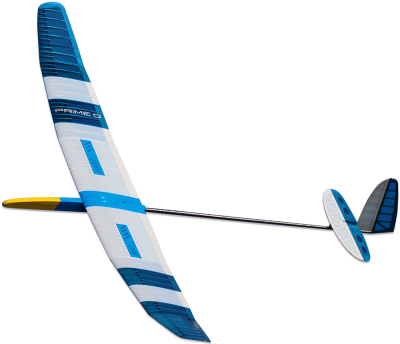
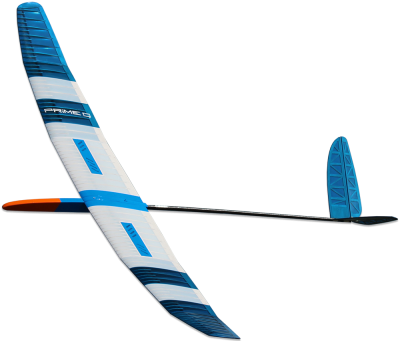
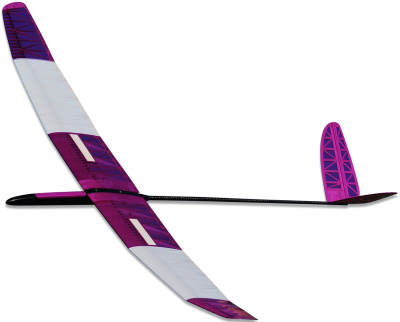
Introducing the New High-End RES F3L Competition Model – Prime Q by CLM Pro
Following the success of the Prime III series in both F3L and F5L versions, CLM Pro has taken several steps forward to develop a superior, next-generation RES model – Prime Q. Representing the latest in model design from the well-known manufacturer CLM Pro, the Prime Q is engineered for peak performance in FAI RES F3L competitions.
The design and development of the Prime Q were once again led by the well-known designer Danko Prprović, who is also responsible for the previous Prime models. His expertise and innovative approach have been instrumental in shaping the Prime series into one of the most recognized and respected lines of RES competition models.
Optimized Performance Through Innovation
The Prime Q is the result of years of research and intensive field testing. It was designed to be a true high-end, all-round model capable of delivering excellent performance in all weather conditions, in full compliance with the FAI RES F3L rule set.
At the heart of the Prime Q is a completely new airfoil, designated DP699 – DP711. Developed over the past three years in close collaboration with a university aerodynamic lab equipped with a wind tunnel, the airfoil is the result of exhaustive testing and optimization of multiple polar curves to find the ideal aerodynamic balance.
The model has been flight-tested across the full spectrum of weather – from dead calm to extreme wind conditions up to 12 m/s – and has proven itself to be a winning design. Over the past year, it has been extensively tested by our Prime Team in competitions all across Europe, consistently proving its quality by achieving podium finishes.
Where the Prime Q truly excels is in its ability to respond to the smallest thermal signals. Even a tiny bubble of lift is enough – the model hooks in effortlessly and climbs smoothly. It's remarkably sensitive to thermals and practically wants to go up.
With the Prime Q, CLM Pro sets a new benchmark in the RES category – precision engineering, competitive performance, and thoughtful design for builders and pilots alike.
Whether you're training, competing, or simply chasing thermals on a Sunday morning, the Prime Q offers an unmatched combination of performance, handling, and build quality.
Key Specifications:
Wingspan: 1992 mm / 78.43"
Length: 1398 mm / 55.03"
Wing area: 37 dm² / 542 sq. in.
RTF weight: from 470 g / 16.60 oz
Controls: Rudder, elevator, spoiler
PRIME Q – Feature Highlights:
- High-performance all-rounder for all weather conditions
- Larger root chord and elliptical wing shape, inspired by Prime III
- Bigger, perforated spoilers for enhanced braking efficiency
- Expanded wing area – 37 dm²
- New airfoil: DP699 - DP771
Designed specifically for RES class
Improved glide ratio and energy retention
Better wind penetration
Higher launch height than Prime III
- Ballast system in fuselage (as in Prime III), but upgraded:
- Quick-release ballast hatch (no screws – swap in 1 seconds)
- Available in both X-tail and V-tail configurations
- Easier and more precise build process:
- Assembly on a laser-engraved jig – no more Styrofoam templates
- Uses a 3 mm laser-cut plywood jig for higher precision and repeatability
- Full-size 1:1 building plans included
- Building Instruction manual in PDF or print – 110 full-color pages with photo strip guidance
Kit includes:
- detailed drawing in color
- detailed building manual with step-by-step images
- laser cut jig from pylwood for easier wing glueing
- laser cut ribs and all other required parts
- templates for gluing the first ribs at angles
- carbon tailboom
- carbon tube for mainspar
- set of ballast with a total weight of 90 gr. + 29 gr steel joiner
- carbon wing joiner
- steel wing joiner for more ballast
- adjustable tow hook, including all necessary parts
- rudder horns, u-nuts and various bolts for mounting
- various magnets for the canopy and spoiler
- bowdens and controls for connecting moving surfaces
- other carbon small parts and accessories
Additional details for each segment of the model can be found below.
Wing Design and Construction
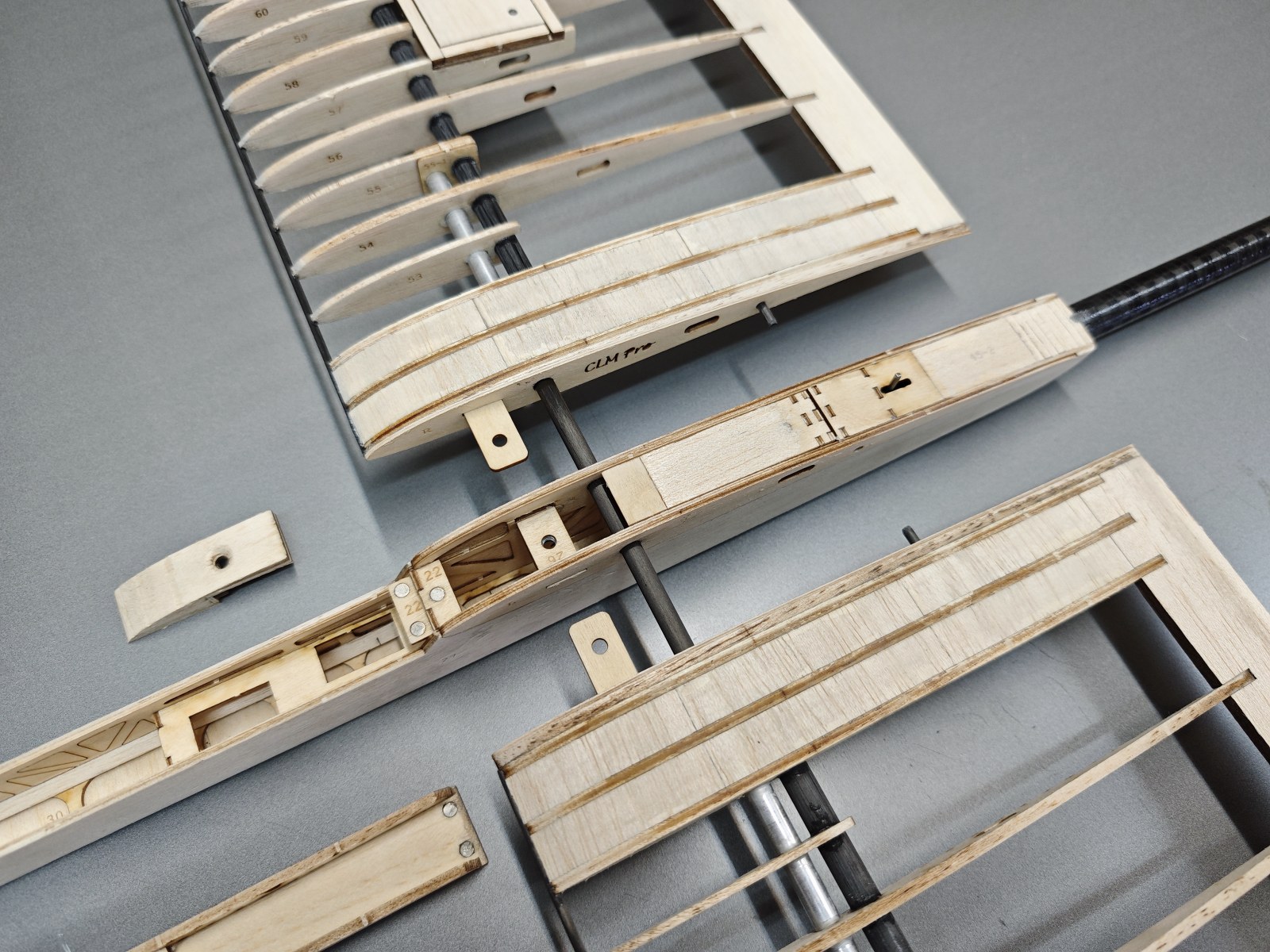
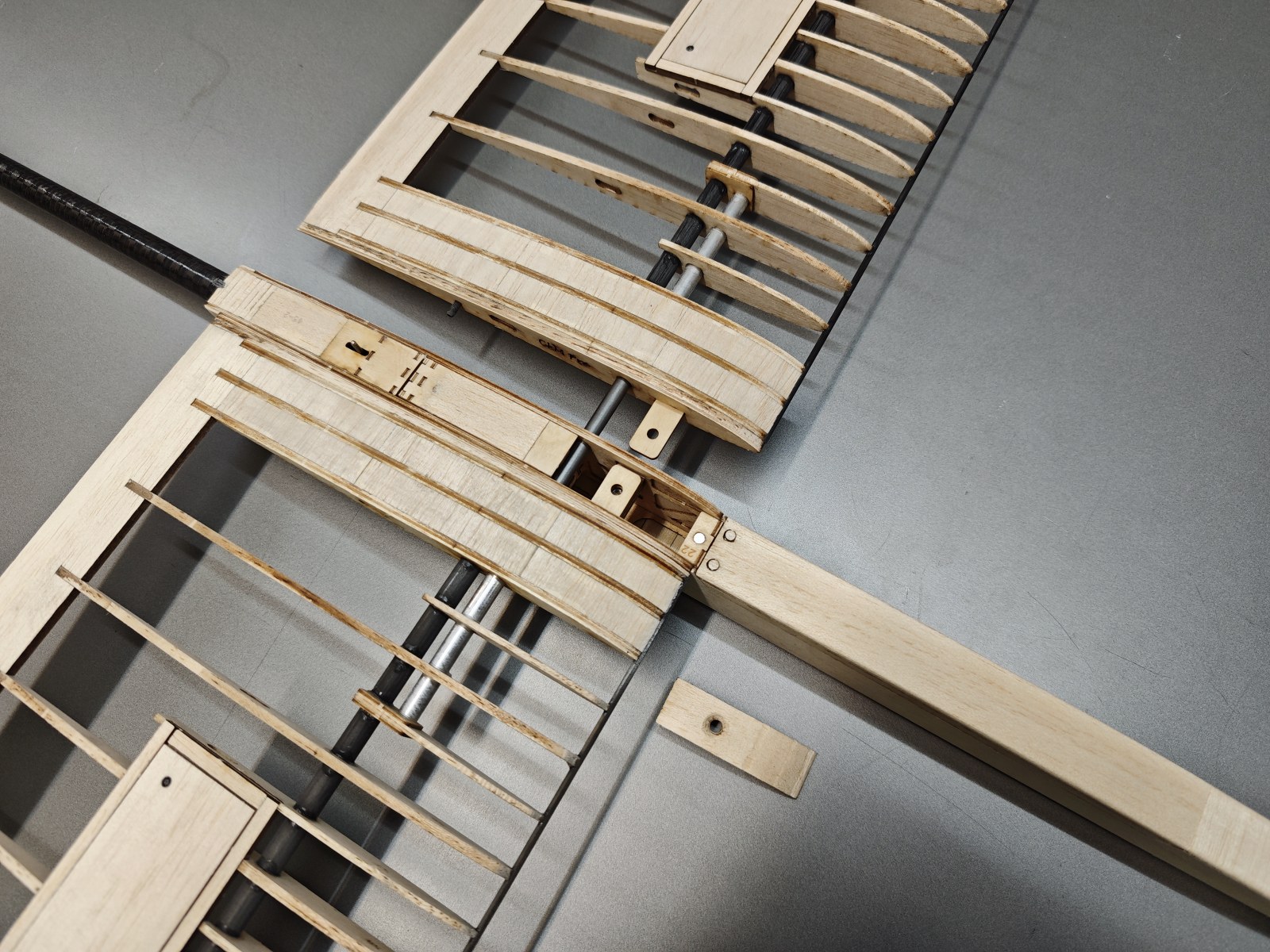
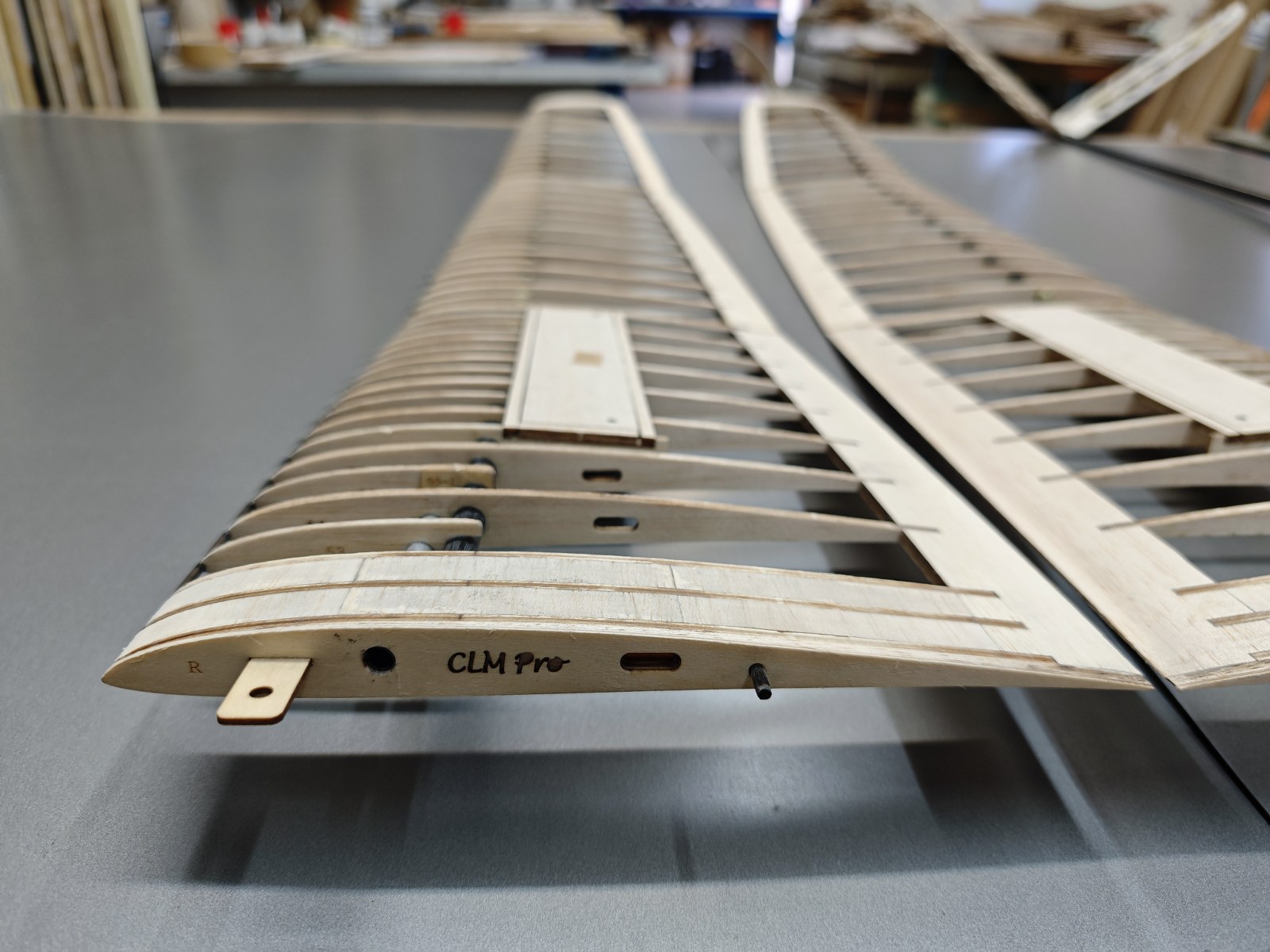
For improved stability, the wing has been designed in multiple segments. It is built in two main parts that connect to the fuselage at the center. The wing features a central panel with a dihedral angle, while both the mid panels and the tip panels are also angled. Each segment—tip, mid, and center—has its own angle, including the two halves that join the fuselage, resulting in excellent flight balance.
The wing maintains an elliptical shape throughout its entire span, giving the model outstanding stability and smooth, easy handling in all flight conditions. The two wing halves are joined with precision carbon joiners, or steel joiners when ballast is needed. Pre-fitted pins ensure that all parts align perfectly during assembly.
To further strengthen the connection and optimize load transfer from the mid panels to the center panel, the kit includes a specially angled carbon joiner. A carbon tube is also provided as the main spar, reinforced with Kevlar at the joints where the wing segments connect. For easier assembly, a laser-cut plywood jig is included, allowing precise alignment during gluing.
The main wing structure is built with full balsa ribs and a pre-shaped balsa trailing edge, with reinforcements in critical areas. Composite materials are used for the leading edge and main spar, all in accordance with FAI F3 RES rules. Every part is laser-cut for a precise fit, requiring minimal finishing – you only need to assemble and bond the parts following the manual.
The center panel is equipped with two separate spoilers, each featuring built-in magnets that ensure they close perfectly flush when not in use.
Fuselage Design
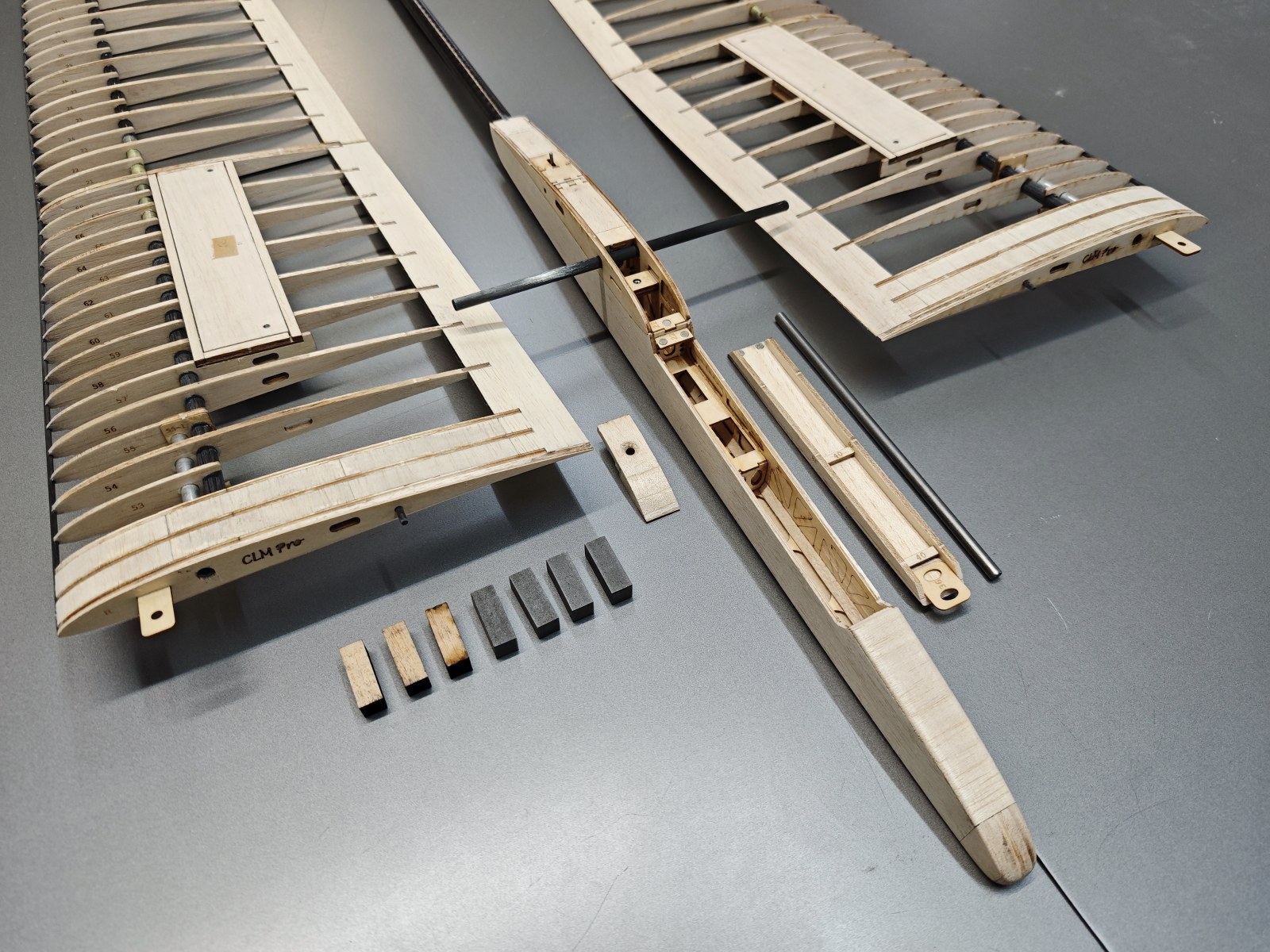
Like all of our fuselages, this one is carefully crafted with an aerodynamic shape and smooth transitions. All parts are precisely laser-cut from high-quality balsa and aviation-grade plywood, with reinforcements placed in strategic areas to provide additional strength without adding unnecessary weight.
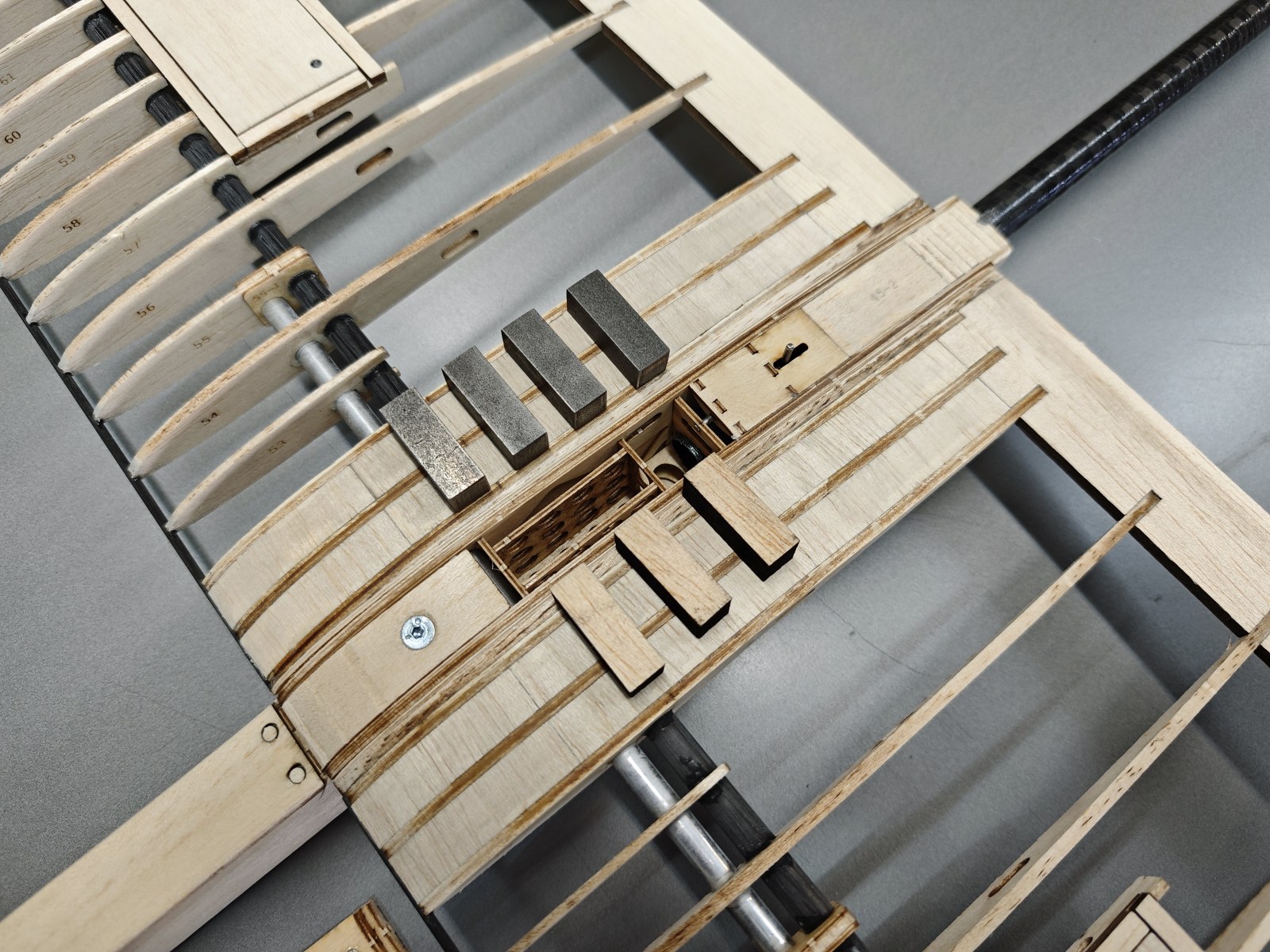
A key innovation in this design is the special ballast bay mechanism. No more screws or difficult access – with a simple slide of the dedicated part, the ballast compartment can be opened or closed instantly, making adjustments quick and effortless even in the field.
The ballast itself is neatly integrated inside the fuselage pod, positioned directly at the model’s center of gravity between the wings. This ensures perfect balance and easy handling. The system includes interchangeable ballast modules that can be swapped in seconds without disassembling the model. The total ballast capacity is 119 g, consisting of four steel blocks (10x10 mm, length 29 mm, each weighing 22.5 g) for a total of 90 g, plus an optional 29 g steel joiner. For finer adjustments, matching balsa inserts are provided so that the ballast box always remains compact and secure, regardless of load configuration.
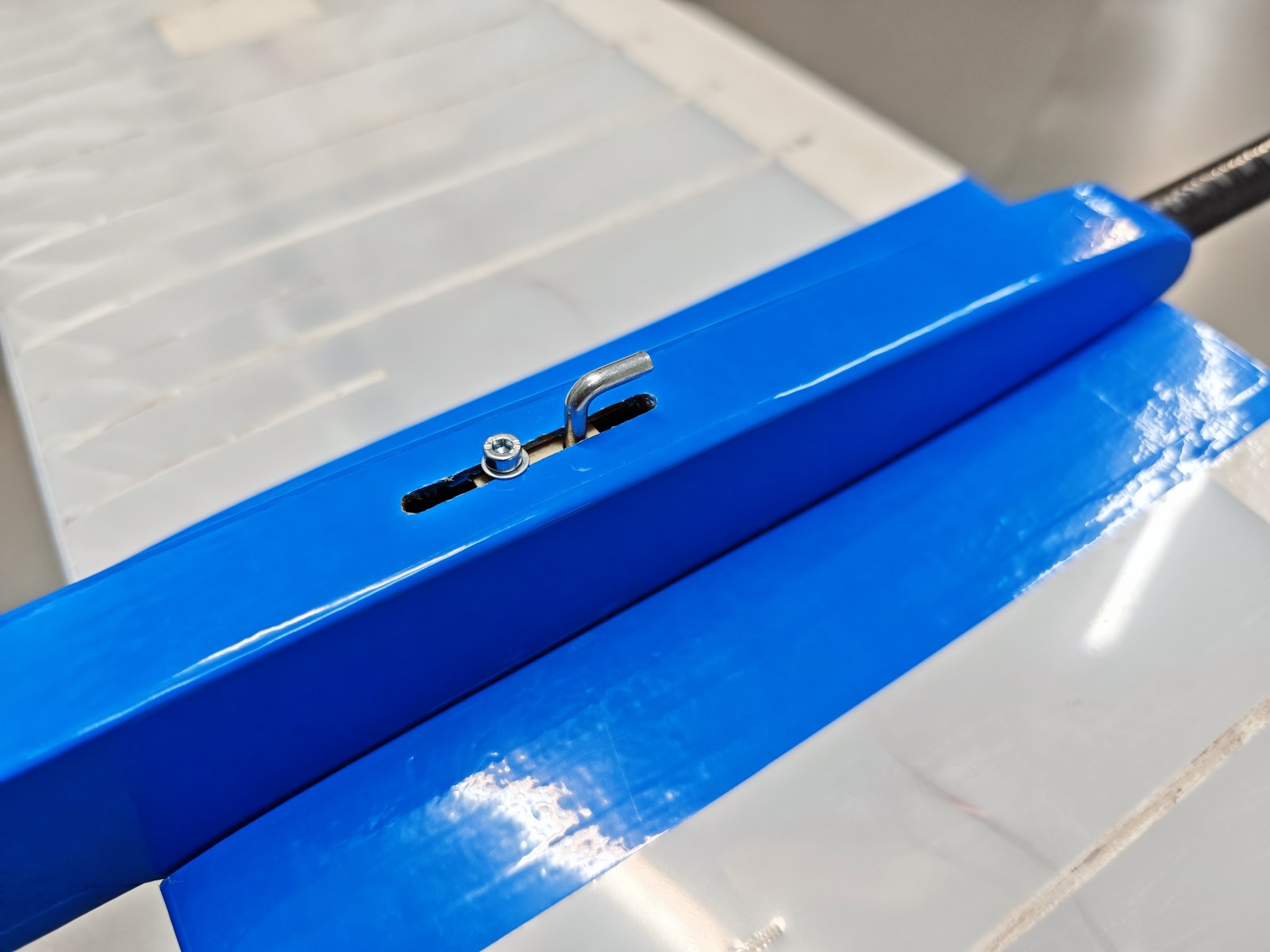
Another standout feature is the adjustable tow hook. Built from multiple components, it allows quick forward-backward position adjustments directly on the field, giving pilots maximum flexibility in different launch conditions.
The canopy is designed with practicality in mind, offering plenty of space to install and access all onboard components. The battery can be inserted and connected with ease, significantly improving usability at the flying site. A magnetic locking system ensures that the canopy closes securely and remains firmly in place during flight.
Finally, the tapered carbon tailboom is manufactured using several types of carbon fibers, with the material orientation optimized to deliver maximum strength at the lowest possible weight. It is further reinforced at strategic points, allowing it to withstand even the rough landings often required when aiming for precision spot landings in competitions. This ensures both durability and precise handling in every flight.
Tail Design
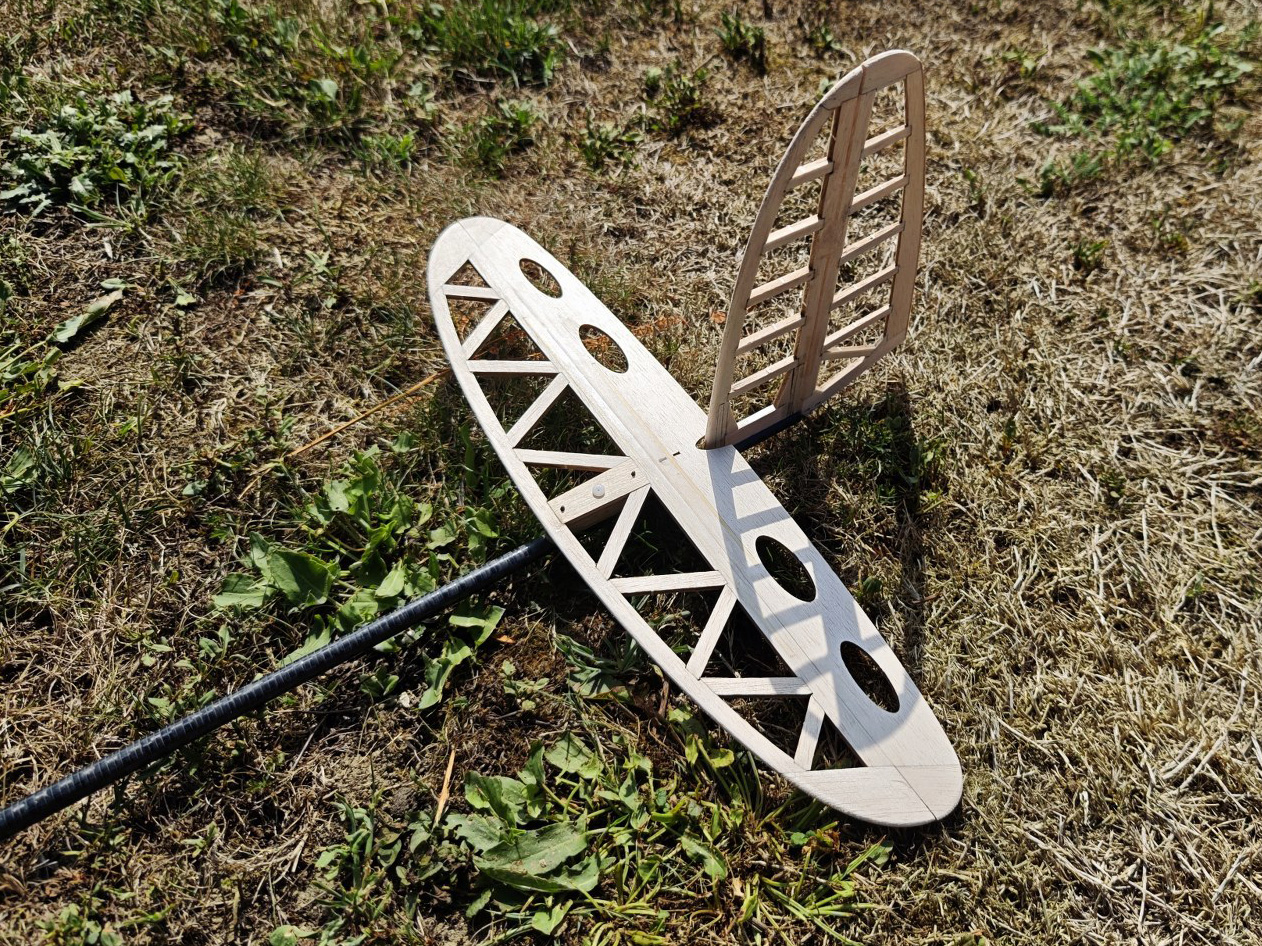
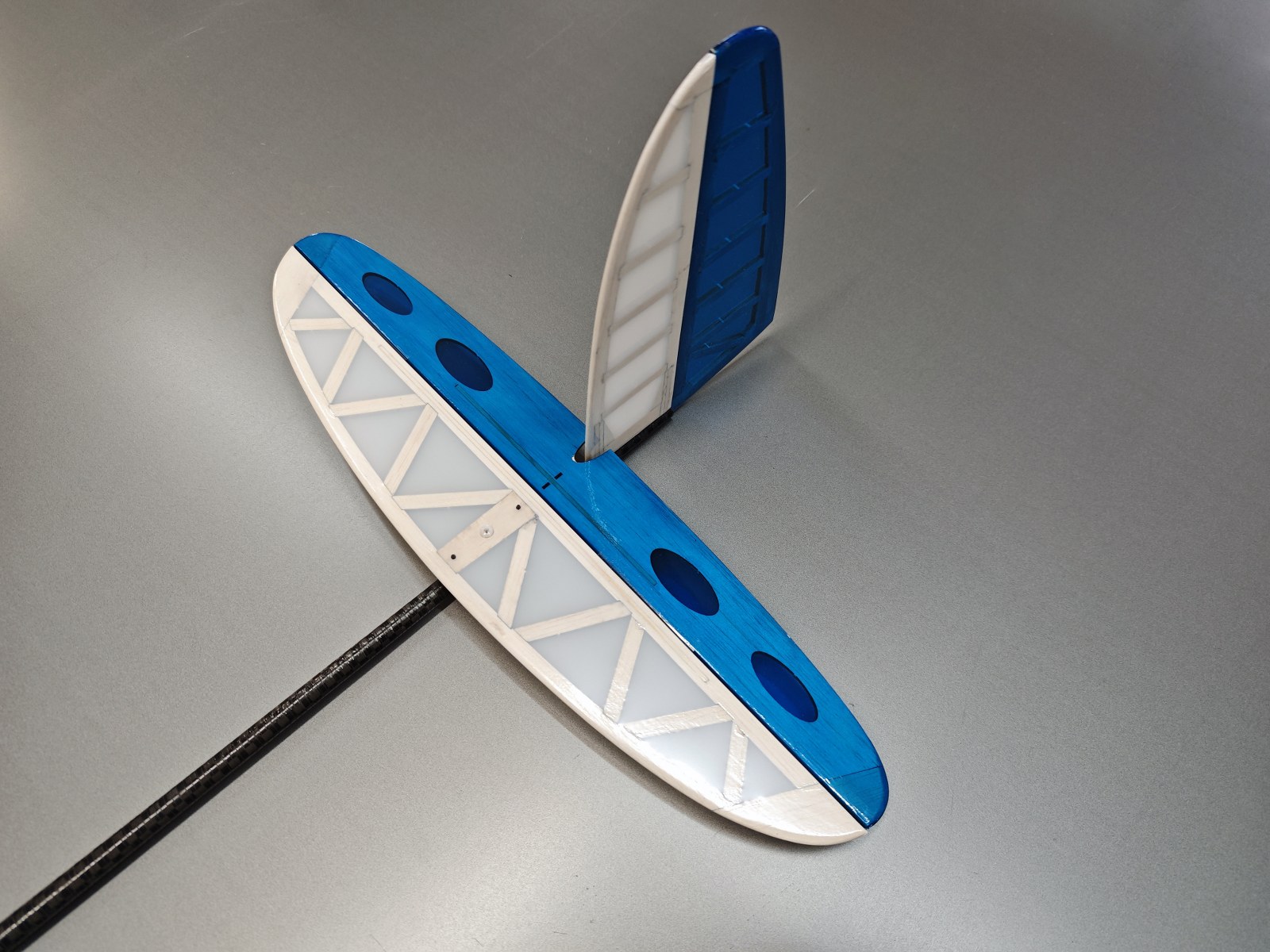
A completely new tail design, optimized for minimum weight and maximum strength, with smooth aerodynamic lines for superior performance.
The tail is constructed from precisely laser-cut balsa components, carefully selected to provide the best possible strength-to-weight ratio.
The elevator is additionally reinforced with a spruce strip for extra stiffness, allowing it to withstand higher loads in strong wind conditions.
Both the rudder and elevator come with pre-installed carbon pins that fit directly into pre-drilled holes in the carbon tailboom, making assembly simple and secure. The carbon tailboom itself is factory-prepared with the necessary holes for mounting, ensuring accurate alignment and strong attachment of the tail surfaces.

Materials & Covering
We use aerospace-tested resin, certified for aircraft construction, for all composite components. In addition, only aero-certified composite parts are used throughout the build to ensure the highest standards of strength and reliability.
Note: You can also order covering film for the model. We use only the highest-quality Oralight covering from the German manufacturer Lenitz Prena / Oracover.
Available colours can be viewed here: https://www.clm-pro.com/store-detail/covering-material
 |
Prime Q build manual can be downloaded here (download will start automatically) |
Recommended glider setup:
Rudder / Elevator Servos: KST 08, CHA DS09, EMAX ES08MA II
Spoiler Servos: KST X06H V6, EMAX ES9051, CHA DS06
Battery Options: Li-ion 1S / 2600 mAh; 2S LiPo 300–850 mAh; NiMh 300–700 mAh
Receiver: 4- or 5-channel receiver compatible with your transmitter
Prime Q Control Movements:
Rudder: 20 mm each way, expo 10–20%
Elevator: 14 mm each way, expo 10–20%
Spoiler: 80° up
| Prime Q specifications: | ||
| Wingspan: | 1992 mm | 78.43" |
| Length: | 1398 mm | 55.03" |
| Wing area: | 37 dm2 | 542 sq. in. |
| Airfoils: | DP699 – DP711 | DP699 – DP711 |
| Weight structure: | 310 g | 10.93 oz |
| Weight covered: | 345 g | 12.20 oz |
| Flying weight from: | 470g | 16.60 oz |
| Control surfaces: | RES | RES |
| Center of gravity | 82-84 mm from wing leading edge | |
| Prime Q weight of parts: | ||
| Fuselage | 52 g | - 1.83 oz |
| Tailboom | 17 g | - 0.59 oz |
| V-tail | 12 g | - 0.42 oz |
| Center panel - half | 50 g | - 1.76 oz |
| Middle wing panel | 30 g | - 1.05 oz |
| Tip panel | 12 g | - 0.42 oz |
| Tow hook | 7 g | - 0.24 oz |
| Carbon joiner | 6 g | - 0.21 oz |
| Bolts | 3 g | - 0.10 oz |
| Bowdens | 10 g | - 0.35 oz |
Subscribe to our Newsletter in order to get notifications about all our newest products and discounts
© Copyright 2018 by CLM-Pro